He puts everything from fish bones to used coffee beans to delicious use
Chef Emanuele Faggi will never forget one habit his mentor Chef Carlo Cracco had when he was working at the latter'southward eponymous Michelin-starred restaurant in Milan, Italy.
Well-known for advocating minimal nutrient wastage, Cracco would inspect the restaurant bin every nighttime to make sure that no useful parts of an ingredient were discarded.
"He influenced and shaped my culinary values during my five years with him," said Faggi, who became caput chef of Zafferano Italian Eating house & Lounge terminal January. "Information technology became a habit for me to work conscientiously with the produce and ingredients."
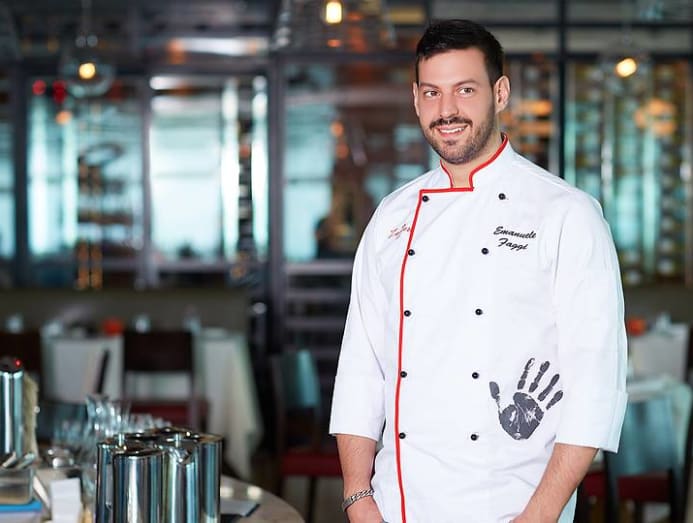
The Tuscan native estimates that food wastage at the restaurant has been reduced by 70 per cent since he joined. The skins of onions, tomatoes, potatoes, and capers every bit well as used coffee beans and the insides of lobster heads, reincarnate as flavour-packed powders.
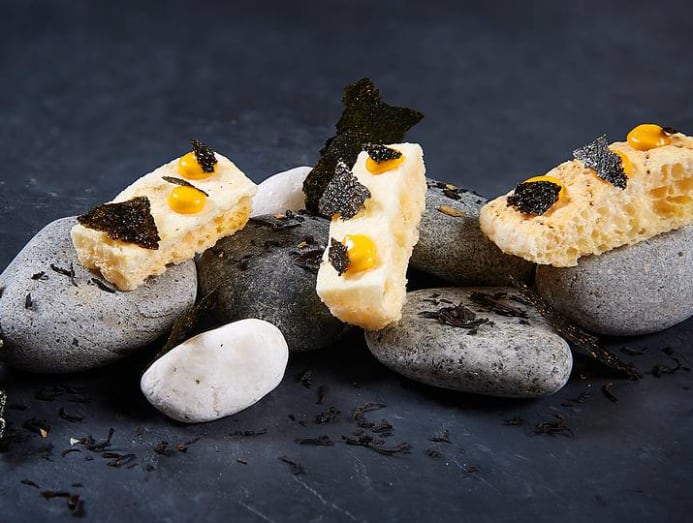
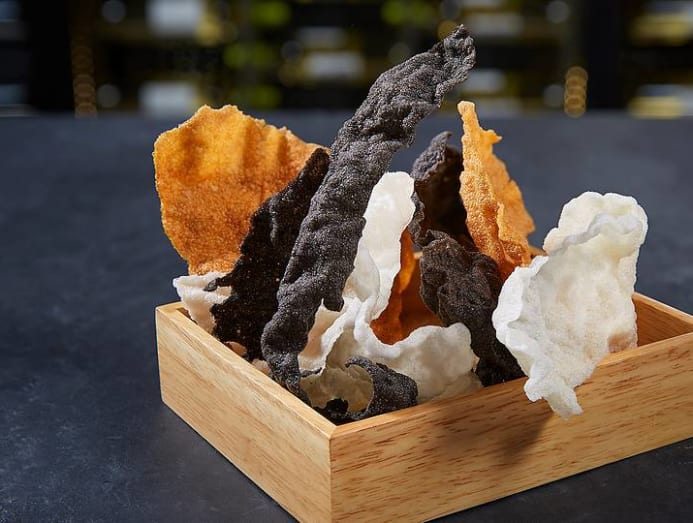
Parmesan cheese rinds are dried and topped with uni cream and nori flakes to exist served as snacks to diners before starters. The rice used for storing truffles is used for making rice crackers and staff lunches, while fish bones and vegetable roots are cooked into stocks and sauces.
Faggi explained, "The kitchen team works works closely with the service team to assess the reservations and prepare the appropriate number of portions. Nosotros have not bad intendance in planning our food preparation to ensure that food wastage is minimised."
Cultivating a waste product-not mindset takes time, although Faggi feels that it should be a process as natural equally non leaving a tap running when we are brushing our teeth. He added, "Nosotros are what we repeatedly do, greatness is not an act but a habit."
"The challenge is changing the mentality of the people whom you work with and inculcating value and respect for each ingredient," said Faggi. "Information technology is also training the team to remember creatively and work conscientiously especially when it comes to managing produce and ingredients. It is and then like shooting fish in a barrel to discard parts that are considered useless instead of thinking of means to extend their usage."
Faggi regularly trains and supervises the Zafferano kitchen team on how to maximise the use of each ingredient. For instance, when a fish is dissected, only the gut is thrown abroad afterwards filleting. Parts of produce that are non used for guests' dishes are used for staff meals.
Reverse to the common perspective that sourcing sustainable produce or implementing sustainable measures would equate to higher costs, Faggi believes that it is virtually creatively utilising an entire ingredient such that its absolute cost is fully realised. He does not like to over-plate his dishes and observes the corporeality of leftover that is returned to the kitchen, making adjustments where necessary without compromising on the overall dining feel.
He finds it heartening that diners are more discerning and enlightened nowadays, and will inquire nigh the provenance and processes behind the nutrient they are eating. He said, "These people are more likely to participate in a sustainability move and support organisations or brands with such practices. I foresee more chefs, especially the younger ones, beingness more than conscientious when they program their operations and paying more attention to the supply sources of their produce and ingredients."
0 Response to "He puts everything from fish bones to used coffee beans to delicious use"
Post a Comment