Minerals Can Form Deep Inside Earthã¢â‚¬â„¢s Crust by
Minerals
Mineral is a naturally occurring crystalline solid with a definite composition. There are nigh v,000 minerals described and then farii. Trying to familiarize ourselves with all of them would be a hopeless task. Luckily, this is non necessary if our goal is to understand how our home planet works and what is it made of.
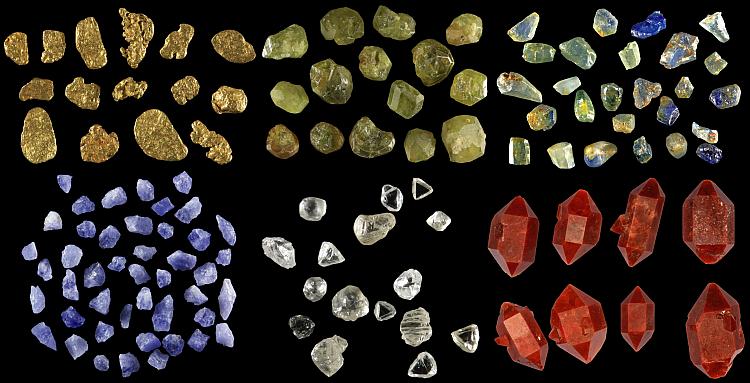
Mineral grains of aureate, garnet (andradite), corundum, sodalite, diamond, and quartz.
About 200 minerals are called the rock-forming minerals. These are the minerals that are listed and described below. More than than 99.9% of the Earth's crust is composed of these minerals. This list of minerals and specific articles about each mineral species are all focused on minerals every bit they naturally occur within rocks and sediments.

More than xc% on the crust is composed of silicate minerals. About abundant silicates are feldspars (plagioclase (39%) and alkali feldspar (12%)). Other common silicate minerals are quartz (12%) pyroxenes (11%), amphiboles (5%), micas (5%), and clay minerals (five%). The residual of the silicate family comprises three% of the chaff. Only viii% of the crust is composed of non-silicates — carbonates, oxides, sulfides, etcane.
1. Silicates
Silicates are minerals that comprise SiO4 tetrahedra in their crystal structure.
1.1 Framework silicates (tectosilicates)
This is volumetrically the almost important group of silicate minerals. More ii thirds of the crust is composed of framework silicates. Each oxygen ion of the SiOfour tetrahedron is shared with another tetrahedron. Hence, three-dimensional framework forms which gives proper name to the grouping. Si:O ratio in silicon tetrahedra is 1:2 or 0.50 (Si may be replaced with Al. In this case Si=Si+Al).
ane.1.i Silica group
Minerals that belong to this group share the aforementioned chemical composition — SiOtwo. By far the most important mineral in this group is quartz.
 | Quartz Limerick: SiOtwo Occurrence: Very abundant (12% of the crust) and widespread. Occurs in many igneous, metamorphic, and sedimentary rocks. Quartz is the principal component of most sand samples. Uses: Numerous industrial uses. Raw cloth in glass-making and a source material for elemental silicon used in semiconductors. Quartz as the near important sand mineral finds all-encompassing use in the construction industry. |
1.1.2 Feldspar group
Feldspars are the most abundant minerals in the crust. At that place are two subgroups: alkali feldspars and plagioclase feldspars. Alkali feldspars are commonly Potassium-rich. Hence, they are oft named 1000-feldspars (orthoclase, microcline, and sanidine belongs to this group). Plagioclase feldspars form a solid solution betwixt Na- and Ca-rich finish-members.
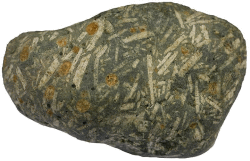 | Plagioclase Composition: NaAlSithreeO8-CaAl2Si2Oviii (solid solution betwixt Na and Ca terminate-member) Occurrence: The near mutual mineral group in the crust. It is a major component in basalt, gabbro, and many granitoids. Plagioclase is also very common in metamorphic rocks but compared with its abundance in the hard rocks, information technology is relatively underrepresented in sedimentary rocks. Plagioclase may be abundant in sand and sedimentary rocks just information technology is not as common there as Thou-feldspar because its resistance to weathering processes is not as good. Uses: Generally used in the structure industry but not because of some specific property but but considering it is a major component of many hard rocks suitable for aggregate-making. Plagioclase-bearing rocks are oft used as dimension stones, specially valued are rocks that contain irised plagioclase varieties. Plagioclase (Ca-rich terminate-member) could potentially exist a source of aluminum but bauxite mining is more economical fashion to obtain this metallic. |
 | Orthoclase Composition: (Yard,Na)AlSiiiiOeight Occurrence: A very common mineral in felsic igneous rocks like granite, syenite, granodiorite and also in metamorphic rocks (schist, gneiss). Orthoclase is as well common in clastic sedimentary rocks. Its colour is variable, usually pink, yellowish, gray. Orthoclase is difficult to distinguish from microcline (they are dimorphous — having the aforementioned chemical limerick but different crystal symmetry). Orthoclase dominates in younger (Phanerozoic) intrusives. Microcline occurs more often in deep-seated magmatic intrusives. Uses: K-feldspar simply as plagioclase is used in construction industry as aggregate and also every bit a major part of many dimension stones, especially granite. Orthoclase is used as filler in paints, plastic and rubber. G-feldspar is also used in the ceramics industry. Alumina from feldspars improves durability and hardness of glass and improves its resistance to chemic corrosion. 1000-feldspar is too used equally a flux which lowers the melting temperature of ceramic mixtures or drinking glass. |
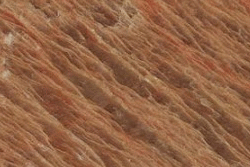 | Microcline Limerick: (K,Na)AlSi3O8 Occurrence: A common mineral in granite and high-class metamorphic rocks. Microcline occurs in rocks that formed deep in the crust. Information technology is absent in volcanic rocks. Uses: Orthoclase and microcline accept similar properties. They are used the same way. |
i.1.iii Feldspathoid group
Feldspathoids are minerals that somewhat resemble feldspars and commonly class instead of feldspars if there is not enough silica available. Compared to feldspars, feldspathoids are relatively rare minerals.
 | Sodalite Limerick: NaviiiAl6Si6O24Cl2 Occurrence: Sodalite can be considered a mineral group that likewise includes haüyne and nosean. Sodalite grouping minerals occur mostly in silicon-deficient, sodium-rich igneous rocks but also in some contact metamorphosed carbonate rocks. Uses: Beautiful blueish color makes sodalite-begetting rocks valuable as dimension stones. |
i.two Sheet silicates (phyllosilicates)
An important grouping of minerals, specially inside the topmost twenty kilometers of the crust. All sheet silicates are hydrous. That's why they are important in the upper part of the crust. There is too high pressure for them in the lower crust — water gets pushed out of the crystal structure. Silicon tetrahedra are joined to course parallel sheets. Si:O ratio is 2:5 (0.xl).
1.ii.1 Serpentine group
Serpentine grouping minerals are an alteration products of olivine and pyroxene (ultramafic rocks).
1.2.2 Mica grouping
Micas comprise nearly 4% of the crust.
 | Muscovite Composition: KAl2(AlSi3Ox)(OH)2 Occurrence: Muscovite is a common mineral establish in many rock types. Muscovite is common in Al-rich igneous rocks like granite and pegmatite. Muscovite, especially every bit a fine-grained sericite, is widespread in metamorphic rocks similar schist, slate, gneiss, etc. Muscovite is as well mutual in clastic sediments and sedimentary rocks. Uses: Muscovite has many uses. It has been used as a substitute of window glass. Nowadays it is used more oftentimes in pulverized form in cosmetic products, for example nail polishes. Its purpose is to add together silky luster. It has the aforementioned role every bit a filler in plastics, paint and wallpaper coatings. Muscovite is an of import industrial mineral that is used in insulators, transistors and capacitors. |
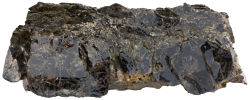 | Biotite Limerick: Chiliad(Iron,Mg)3AlSi3Ox(OH)two Occurrence: Widespread mineral in many rock types. It is a main atomic number 26-bearing silicate in felsic igneous rocks and metamorphic rocks with similar composition (schist, gneiss). Mg-rich variety phlogopite is common in ultramafic and metamorphosed carbonate rocks. Biotite occurs in clastic sediments likewise but information technology is not as common there as muscovite considering of poorer resistance to weathering. Uses: Biotite itself is not nigh every bit widely used as is muscovite merely vermiculite which is an amending product of biotite has many uses. It is used as a filler, insulation material and it is an additive in potting soil. |
 | Glauconite Limerick: (K,Ca,Na)1.half dozen(Fethree+,Al,Mg,Fetwo+)fourSi7.3Al0.7Oxx(OH)4 Chemical composition of glauconite is very complex considering of numerous possible replacements. Occurrence: Glauconite is a dark-green-colored mineral (it shares characteristics of both micas and clay minerals) found mostly in marine sandstones. Uses: Glauconite is mainly used in h2o purification to remove soluble iron, manganese and hydrogen sulfide. It is also added to soil to improve its properties: acts every bit a potassium source and loosens clayey soil. |
1.ii.3 Chlorite group
At that place are many chlorite group minerals which are by and large duplicate from each other by their physical and optical properties. Sometimes chlorite is included in the clay minerals group simply I decided to continue it separately considering chlorite is also an important metamorphic mineral which clay minerals are not.
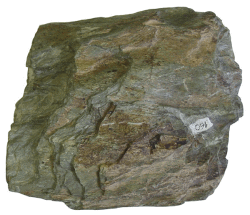 | Chlorite Limerick: (Mg,Fe,Al)3(Si,Al)4O10(OH)2·(Mg,Atomic number 26,Al)iii(OH)6 Occurrence: Chlorite group minerals are generally green in color and occur mostly in low- or medium-grade mafic or pelitic metamorphic rocks (greenstone, chlorite schist) or in soil as a weathering product of mafic minerals. Uses: Chlorite as a mineral separately from others have no specific uses. But equally a common mineral it is an ingredient in clay and too in chlorite schist which may notice employ as a edifice fabric. |
1.2.4 Clay minerals
These minerals are then fine-grained that you have no hope to see individual crystals with a naked eye. They are very important for united states because they occur in the upper parts of the crust and are widespread (think about mud which is in large part equanimous of clay minerals). Clay minerals are weathering products of other silicate minerals.
 | Clay minerals Limerick: Al2SiOiiO5(OH)4 (kaolinite). Composition of clay minerals is variable and very complicated because of numerous substitutions. The fact that we do not have an agreement what actually is a clay mineral and which minerals should we include into this group does not make things easier. Occurrence: Clay minerals are disintegration products of other minerals. They occur wherever there is wet-driven weathering. Clay minerals form a major part of sedimentary rocks, peculiarly mudstone and shale. Uses: Clay minerals have enormous range of possible uses. Dirt is used to make bricks, cement, ceramics. Information technology is used equally a filler in paper, plastics, paint, rubber, etc. Dirt has also been used in cosmetics, pharmaceuticals and fifty-fifty food. |
1.two.five Other sheet silicates
 | Talc Composition: Mg3SifourOx(OH)two Occurrence: Talc is a metamorphic mineral. It is an alteration product of Mg-rich rocks (generally serpentinite and impure dolostone). Talc is a major component in soapstone (named so because talc gives it soapy feel when touched) and talc schist. Uses: Talc has many uses. It is used in diverse cosmetic/medical products similar lipsticks, infant powder, antiperspirant sticks, etc. It is as well used industrially equally a filler in paper, plastics and safe. |
Rare sheet silicates I take written almost: zinnwaldite.
1.iii Chain silicates (inosilicates)
Chain silicates are mutual minerals in mafic igneous (specially pyroxenes) and metamorphic (especially amphiboles) rocks. Their structure is composed of many parallel bondage (double chains in amphiboles) of silicon tetrahedra. That's why the crystals of chain silicates tend to be elongated. Pyroxenoids are relatively scarce minerals that are structurally similar to pyroxenes. Si:O ratio is 1:3 (pyroxenes and pyroxenoids) or 4:11 (amphiboles) (0.33 or 0.36).
1.3.1 Pyroxene grouping
i.3.2 Pyroxenoid group
Pyroxenoids are relatively rare minerals when compared with pyroxenes. The difference betwixt them is that the chains of pyroxenoids are twisted or distorted while they are directly in pyroxenes. Common pyroxenoid minerals are wollastonite, rhodonite and pectolite.
 | Wollastonite Limerick: CaSiO3 Occurrence: Wollastonite is found in metamorphosed limestone. Information technology is a result of chemical reaction between silicate and carbonate minerals. Uses: Wollastonite has a number of industrial uses. It is a flux in metallurgy, filler in plastics, and it is also used every bit a replacement to asbestos. |
1.3.three Amphibole group
Amphiboles are common minerals in metamorphic rocks (amphibolite, glaucophane schist) and some igneous rocks (especially diorite). Amphiboles are hydrous minerals. Therefore, amphiboles are not stable in anhydrous and loftier-temperature conditions where they tend to transform to pyroxenes.
 | Hornblende Composition: (Na,Grand)0-1Ca2(Mg,Atomic number 262+,Atomic number 26three+,Al)5(Si,Al)8O22(OH)two The chemical limerick of hornblende is interesting because it contains all eight chemical elements that are about abundant in the World's crust (O, Si, Al, Fe, Ca, Na, K, Mg). Occurrence: Hornblende is not a single mineral. It is the well-nigh abundant mineral grouping inside amphiboles. Hornblende occurs in many igneous (diorite, andesite, granitoids) and metamorphic rocks (amphibolite, hornblende gneiss). Uses: Hornblende itself has no uses simply rocks containing it are widely used as dimension stones and every bit a raw cloth for construction industry. |
 | Glaucophane Composition: NaiiMg3AliiSi8O22(OH)2 Occurrence: Glaucophane is a major mineral in high-force per unit area low-temperature metamorphic rocks known as blueschists. Associated minerals include chlorite, pumpellyite, albite, epidote, jadeite, and quartz. Uses: None. |
 | Riebeckite Composition: Na2Iron2+ iiiFeiii+ 2Si8O22(OH)2 Occurrence: Riebeckite is found in alkaline igneous rocks like nepheline syenite, brine granite, syenite. Crocidolite is a fibrous (asbestiform) variety of riebeckite which is found in metamorphosed ironstones. Uses: Riebeckite variety crocidolite (blue asbestos) has been mined and used as an asbestos in the by just nowadays in most countries it is non used anymore because of health concerns. "Tiger's center" is a chatoyant gemstone composed of pseudomorphous quartz after crocidolite. |
1.4 Disilicates (sorosilicates)
The structural element that defines this group is a double silicon tetrahedron that looks like a bow tie (two tetrahedrons share the same oxygen ion). At that place are not too many disilicates but they tend to resist weathering quite well and are therefore oft abundant in sand. Si:O ratio is two:7 (0.29).
1.4.1 Epidote group
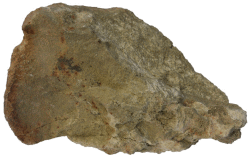 | Epidote Composition: Ca2Alii(Al,Fe3+)OOH[Si2Oseven][SiO4] Occurrence: Epidote is the well-nigh abundant disilicate. Epidote occurs generally in metamorphic rocks. Information technology is common in hydrothermal zones. Especially common is epidotic amending along faults and fractures betwixt rocks. Epidote is too a mutual mineral in sand. Uses: Information technology is a semiprecious gemstone (both every bit a crystal and as a fine alteration of granitic rocks known every bit unakite). No industrial uses. |
1.5 Ring silicates (cyclosilicates)
A pocket-size group of minerals that contain vi-fold rings of silicon tetrahedra that are on peak of each other to form columns. Si:O ratio is 1:iii (0.33).
 | Beryl Composition: Al2BeiiiSi6O18 Occurrence: Beryl occurs mostly in granitic pegmatites where it may course cute crystals. It occurs less unremarkably in granites and syenites. Beryl may be found in high-temperature hydrothermal systems. Uses: Beryl is the chief source of beryllium. Beryl is a valued gemstone (emerald and aquamarine). |
one.6 Orthosilicates (nesosilicates)
Silicon tetrahedra are isolated from each others in orthosilicates. Orthosilicates is a diverse and widespread grouping of minerals. Si:O ratio is 1:4 (0.25).
1.6.ane Garnet grouping
There are two subgroups of garnets: pyralspites and ugrandites. Pyralspites (pyrope, almandine, spessartine) are reddish and occur in aluminum-rich metamorphic rocks or igneous rocks. Ugrandites (uvarovite, grossular, andradite) are brownish and occur mostly in calc-silicate rocks.
1.6.ii Aluminum silicates
Aluminum-silicates andalusite, kyanite, and sillimanite share the same composition but differ structurally. They are metamorphic minerals that transform from one course to another with changing force per unit area and temperature.
1.6.3 Other orthosilicates
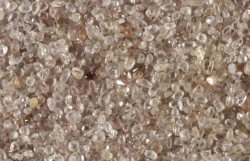 | Zircon Composition: ZrSiOfour Occurrence: Zircon is widely distributed in igneous rocks just usually it occurs in very pocket-size crystals. Zircon is highly resistant to weathering and alteration which makes information technology mutual mineral in sediments and metamorphic rocks. Most of the mined zircon comes from placer deposits. Uses: Zircon is a primary source for zirconium and hafnium (small amount of zirconium is replaced by hafnium in the lattice of zircon). It is as well an industrial mineral considering its resistance to heat is very good. It is used in the manufacture of foundry sand and refractory bricks. Zircon is an especially useful mineral in geological research. Zircon is also used every bit a gemstone. |
 | Staurolite Composition: FetwoAl9O6[(Si,Al)O4]4(OH)2 Occurrence: In medium-form Al-rich metamorphic rocks. It is a major mineral in staurolite schist. Associated minerals are muscovite, garnet, chloritoid, cordierite, biotite and aluminum silicates. Staurolite is very common heavy mineral in clastic sediments where information technology tin can exist misidentified as garnet. Uses: Staurolite is used as an abrasive. Often together with garnet. Twinned crystals have appeal to people because they resemble crosses. |
 | Olivine Composition: (Mg,Fe)2SiO4 Occurrence: Mg-rich olivine is a mutual mineral in mafic and particularly ultramafic rocks. Dunite is nearly monomineralic olivine rock. Metamorphosed carbonate rocks may also contain forsterite. Fayalite (Fe-rich olivine) occurs in more felsic igneous rocks like some granites, syenites, volcanic rocks and atomic number 26-rich metasedimentary rocks. Uses: Olivine (peridot) ia a semiprecious gemstone. Olivine is used predominantly in metallurgy equally a slag conditioner. Olivine is a hard mineral sometimes used as an airblast abrasive. It is a replacement to silica because of reduced risk of developing silicosis. Mg-rich olivine is used in dental ceramics to add together strength. |
 | Chloritoid Composition: (Fe2+,Mg,Mn)two(Al,Ironthree+)Al3O2(SiO4)2(OH)four Occurrence: Chloritoid occurs in low- to medium-grained metamorphic rocks, peculiarly schists, phyllite and quartzite. It is associated with garnet, chlorite, Al-silicates, muscovite, and staurolite. Chloritoid may be easily misidentified equally chlorite. Uses: No uses. |
 | Topaz Limerick: AliiSiO4(F,OH)2 Occurrence: Topaz is constitute in felsic igneous rocks. Large crystals may exist found in pegmatites along with other minerals hosting incompatible chemical elements. Topaz as well occurs in hydrothermal systems where it may be associated with tin can, tungsten and molybdenum minerals. Topaz occurs in clastic sediments merely is hands overlooked. Uses: Topaz is used equally a gemstone. |
two. Carbonates, sulfates, phosphates, and borates
These minerals are classified according to anionic groups: CO3 2- (carbonates), And then4 2- (sulfates), PO4 3- (phosphates), etc.
2.1 Carbonates
Carbonates are an important group of minerals that are most widespread in sedimentary environments, evaporite deposits, and hydrothermal veins. These are environments where carbon dioxide is generally available to grade the fundamental building block of carbonate minerals — the carbonate ion.
2.two Sulfates
Near sulfates occur in evaporite deposits (gypsum, for example) or hydrothermal veins (barite).
2.3 Phosphates
Phosphates are widespread although not very arable minerals considering phosphorous comprises only 0.1% of the Earth's crust.
 | Monazite Composition: (Ce,La,Th)PO4 Occurrence: Monazite is an accessory mineral in felsic igneous rocks like granite, pegmatite, and syenite. It is too plant in some metamorphic rocks (gneiss, mica schist, metamorphosed dolomite). Monazite is resistant to weathering and is therefore frequently nowadays in sand. Uses: Monazite is an important source of thorium, cerium and other rare earth elements (REE) which have numerous industrial applications. Thorium, for example, has been used every bit a fuel in nuclear reactors. Monazite is mostly extracted from sand (placer deposits). |
2.4 Borates
Borates are almost exclusively evaporite minerals constitute in saline lakes. Borate minerals are not found in regions with wet climate because they are moderately soluble in h2o.
 | Ulexite Limerick: NaCaB5O6·5HtwoO Occurrence: Ulexite is found in saline lakes with other evaporite minerals. Most notable localities of cute crystals are California, Chile, and Kazakhstan. Uses: Ulexite is a source of boron which has many industrial uses. |
iii. Oxides, hydroxides, and halides
These minerals are grouped together because they all have so-chosen simple anions.
iii.one Oxides
Oxides are compounds of oxygen and one or more than metal cations. Oxygen is the nigh abundant chemical element in the crust but much of it is already tied up in silicates (silicon is number 2 in abundance later oxygen). Oxides typically do not grade the major part of rocks but they are very widely distributed. Rocks that comprise high concentration of oxide minerals are possible metal ores.
iii.1.one Spinel group
Spinel group contains three subgroups or series: spinel series, magnetite series, and chromite series. They are all structurally similar but differ in limerick. Each series has 1 important mineral that also gives name to the serial. They are the minerals that are described below.
3.one.two Other oxides
 | Cuprite Limerick: CuiiO |
 | Hematite Composition: Fe2O3 |
 | Corundum Composition: Al2Oiii |
 | Ilmenite Composition: FeTiO3 |
 | Rutile Composition: TiO2 |
 | Cassiterite Composition: SnOtwo Cassiterite is an oxide of can. It is the principal ore of tin. Cassiterite crystals take a strong luster and they are often twinned (elbow twins). |
3.ii Hydroxides
Hydroxides are common minerals that occur as fine-grained (earthy) aggregates which are often mixtures of several minerals. Limonite, for example, is not a singled-out mineral species because it contains several fine-grained minerals, most of them hydroxides. Hydroxides are very common minerals in soil.
iii.3 Halides
Halides are minerals where anion is one of the halogen elements (Cl, F, Br, I). Simply 3 halides are common minerals. Halite and sylvite are very mutual evaporites and fluorite is a common hydrothermal mineral.
 | Halite Composition: NaCl Occurrence: Halite is a common evaporite mineral and may form very thick salt deposits. Every liter of seawater with boilerplate salinity contains 35 grams of dissolved halite. Halite is a major component of salt diapirs which rise buoyantly from deeply buried table salt deposits. Halite is associated with gypsum, sylvite, dolomite, and calcite. Uses: Halite is well known as an ordinary table salt. Withal, this is not the only and even the most important apply of it. Halite is mostly used every bit a raw textile in the chemic industry. Information technology is likewise used to go on roads ice-complimentary during winter. |
 | Sylvite Composition: KCl Occurrence: Sylvite is an evaporite mineral like halite but requires much more evaporation than does halite. Associated minerals are gypsum, halite, dolomite, calcite, and anhydrite. Uses: Sylvite is primarily used to make potassium-releasing fertilizers. |
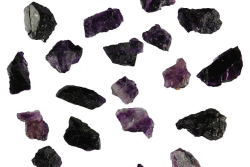 | Fluorite Limerick: CaF2 Occurrence: Fluorite is a mineral precipitated from hydrothermal fluids. Fluorite is usually associated with sulfides, barite, and carbonates. Fluorite is an accessory mineral in late-magmatic felsic rocks similar granite, syenite, and especially pegmatite. Greisen is also unremarkably rich in fluorite. Fluorite may be a cementing mineral in sandstones and occur in clastic sediments. Uses: Fluorite is the principal source of fluorine which has numerous industrial applications. |
4. Sulfides
Sulfides is a very large mineral group (nearly 600 minerals). Only few sulfides are actually abundant but many of them are important ore minerals. Sulfides occur mostly in hydrothermal veins.
 | Chalcopyrite Composition: CuFeS2 Occurrence: Chalcopyrite usually occurs with other sulfide minerals in hydrothermal systems. Chalcopyrite is the most common copper-bearing mineral and it is the primary source of copper. Chalcopyrite is sometimes found in mafic igneous rocks equally an accessory stage. Uses: Chalcopyrite is the principal source of copper. It is usually mined from porphyry copper deposits. Chalcopyrite in these rocks is hydrothermal. The copper-bearing fluids originate from porphyritic felsic plutons. |
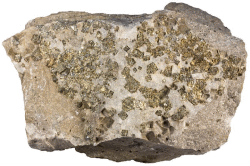 | Pyrite Composition: FeSii Occurrence: Pyrite is the most abundant sulfide mineral. Pyrite is found in hydrothermal veins, igneous rocks (as an accessory mineral), some metamorphic rocks, and sedimentary rocks also (slate, coal, etc.). Pyrite is besides an important biomineral, it is ofttimes formed in biologically controlled processes. Uses: Pyrite in most cases is not useful at all. It is an undesired addition to other minerals deemed more worthy of mining. Pyrite is a nuisance in these cases because information technology disintegrates rapidly in the weathering environs. This process releases oestrus which can lead to the combustion of dumps containing oil shale, for example. And even more importantly, the disintegration process releases sulfuric acid which is harmful to the surround. Withal, pyrite has been mined every bit a source of iron and sulfur and some deposits contain inclusions of gold in pyrite crystals. |
 | Marcasite Limerick: FeS2 Occurrence: Marcasite is a common mineral in low-temperature hydrothermal systems. It is oft associated with galena and sphalerite. Marcasite may also class every bit a consequence of supergene processes. Marcasite concretions occur in coal, limestone and shale. Fossils in these rocks may be pseudomorphically replaced by marcasite. Uses: Marcasite is not particularly useful. It may be mined with other more important sulfide minerals. Theoretically marcasite could be a source of sulfur and fe, but we accept improve alternatives for them. |
 | Orpiment Composition: As2S3 Occurrence: Orpiment precipitates out of volcanic gases or from hot springs and depression-temperature hydrothermal solutions. Uses: Information technology has been used countless times as a poisoning amanuensis. Nowadays information technology has more industrial uses. It is used in the production of fireworks, semiconductors, linoleum, etc. |
5. Native elements
Native elements are rare in the crust. Graphite is the most mutual of them and forms sometimes significant parts of rocks. Other native elements are found in small quantities and they are oft very valuable mineral resources.
5.1 Metals
Metals rarely occur equally native elements.
5.2 Nonmetals
Sulfur and graphite are the nigh common non-metal native elements in the chaff. Diamond is very rare. It is definitely no rock-forming mineral simply I think it is appropriate to include it here because diamond is highly sought after jewel and important for industry because of its farthermost hardness.
References
1. Klein, C., Hurlbut, C. S. (1993). Manual of Mineralogy
two. Commission on New Minerals, Classification and Nomenclature
iii. Nesse, William D. (2011). Introduction to Mineralogy
four. Deer, W. A., Howie, R. A. & Zussman, J. (1996). An Introduction to the Stone-Forming Minerals
youngthesseneated.blogspot.com
Source: https://www.sandatlas.org/minerals/
0 Response to "Minerals Can Form Deep Inside Earthã¢â‚¬â„¢s Crust by"
Post a Comment